Island Rhythm on the Roads of Mo'orea, Huahine, and Bora Bora
Polynesia has a way of slowing time. Coconut palms lean over quiet lagoons, fishing boats drift beside coral reefs, and village roads follow the shoreline beneath towering volcanic peaks. Exploring these islands by bicycle reveals the easy rhythm of everyday life across the South Pacific.
French Polynesia stretches across a vast swath of the Pacific Ocean, yet life on its islands remains closely tied to the land and sea. Traveling here by bicycle offers a rare perspective on island life. The pace of riding mirrors the cadence of village mornings, afternoon trade winds, and evenings when the lagoon turns silver beneath the setting sun.
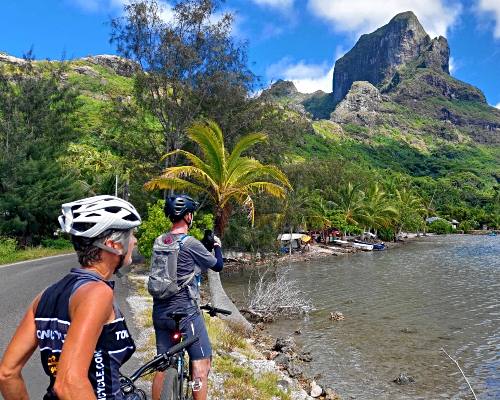
Enjoying a loop ride around Bora Bora
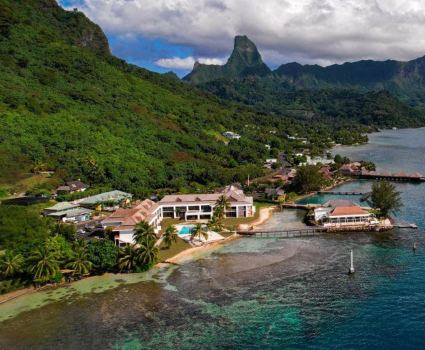
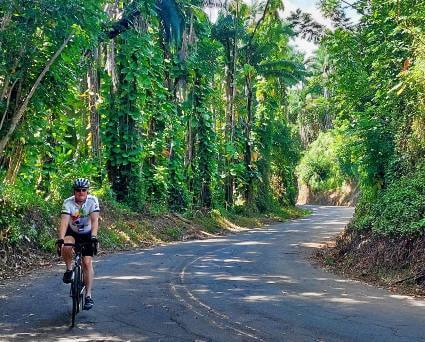
 The journey begins in Tahiti before a ferry glides across the lagoon toward Mo'orea, an island where jagged volcanic peaks rise dramatically above the water. The road circling Mo'orea follows the shoreline beneath palms and breadfruit trees, passing small villages where roadside stores sell fresh fruit and fishermen mend nets in the shade.
Cycling around Mo'orea offers one of the most scenic introductions to the South Pacific. The island's twin bays carve deep into the mountainous interior while the lagoon shifts between shades of turquoise and deep blue. Riders pause at quiet beaches and village churches, and those seeking a challenge can climb toward the Belvedere overlook for sweeping views across the island's dramatic landscape.
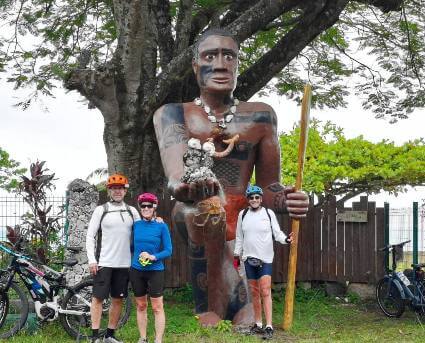
Ancient Polynesian history appears quietly along these roads. Marae temples scattered across the islands once served as sacred gathering places linking communities to their ancestors and the natural world. Visiting sites such as Marae Titiroa offers a glimpse into traditions that continue to shape island life.
From Mo'orea the journey continues westward to Huahine, one of the most relaxed islands in the Society chain. Life here moves at a gentle pace. Fishing boats glide across the lagoon each morning and quiet roads wind through coconut groves and small coastal villages. Cyclists often hear friendly greetings of "ia orana" while passing homes and village shops.
Huahine also reveals remarkable examples of Polynesian ingenuity. Stone fish traps built centuries ago still stand along the shoreline, carefully arranged to capture fish as tides move through the lagoon. Nearby, the ancient Marae Manunu temple rests quietly among the trees, another reminder of the island's deep cultural heritage.
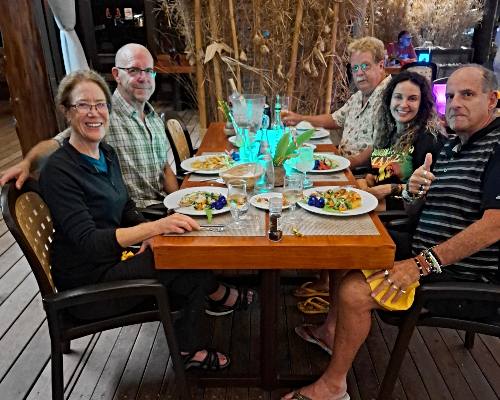
Food is always great on Moorea
 Between rides the lagoon invites travelers to slow down and enjoy the water itself. Coral gardens shimmer beneath clear water filled with tropical fish, making snorkeling a natural extension of the day's ride. Some afternoons unfold beside the beach while others offer the chance to explore the lagoon by outrigger canoe or sailboat.
The final island of the journey is Bora Bora, whose dramatic peaks rise sharply above one of the world's most famous lagoons. Cycling here follows the narrow coastal road that circles the island beneath the towering summit of Mount Otemanu. Though the route is short, riders often take their time, pausing at beaches and viewpoints along the lagoon.
Food provides another memorable connection to island culture. Fresh tuna appears in many forms, from simple sashimi to poisson cru marinated in lime and coconut milk. Lagoon fish, grilled pork, and local vegetables reflect the blend of Polynesian tradition and French culinary influence found throughout the islands.
By the final evening beside the lagoon, the journey begins to feel less like a tour and more like time spent living within the rhythm of the islands. Traveling by bicycle reveals Polynesia beyond the postcard image, where quiet villages, coastal roads, and warm welcomes define the experience.