Kyoto to the Sea

Cycle from Kyoto's quiet lanes into the rural north, where thatched villages, river valleys, fishing ports, pine-covered sandbars, and the Sea of Japan coast lead to a classic onsen finale in Kinosaki.

9 days ✧ Guided ✧ 45 to 70 km per day ✧ Boutique inns ✧ Support van
Start: Kyoto/finish: Kinosaki ✧ Season: April to November ✧ From: $7895

Check Dates

From Old Kyoto to the Sea of Japan

Begin in Kyoto's temple lanes, then ride beyond the famous city into cedar hills, thatched villages, fishing ports, pine-covered sandbars, and the wild edge of the Sea of Japan. This is Japan by backroad: elegant, rural, salty, and wonderfully surprising.

Kyoto has a way of making you linger. A garden wall, a temple bell, a canal-side lane, the soft glow of lanterns outside a small restaurant. But the magic of this ride is that Kyoto is only the beginning. After easing into the journey with a relaxed spin through the city, past quiet waterways, the Silver Pavilion area, Shimogamo Shrine, and the Philosopher's Path, the route begins to peel away from the famous capital and into a Japan that many travelers never see.

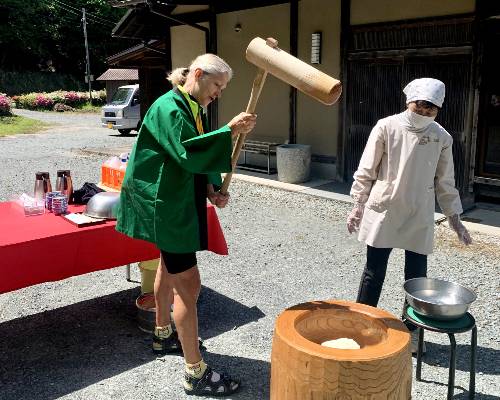
Try your hand at pounding rice to make moji cyclists trying to pound rice for moji The change comes quickly. Neighborhood streets give way to forested hills northwest of the city, where the road winds upward and the pace slows to the rhythm of climbing. On the far side, the countryside opens along the emerald Katsura River, through villages tucked into the folds of northern Kyoto Prefecture. Yuzu groves, farmhouses, and narrow roads lead toward Miyama, a village of thatched kayabuki farmhouses that feels less like a preserved attraction than a living pocket of rural Japan. Dinner here is hearty, local, and unpretentious, the kind of meal that tastes especially good after a day of riding into cooler mountain air.
From Miyama, the ride slips deeper into quiet country. Forest roads climb toward Gonami Pass, then descend along the clear Minami River, where small communities and long stretches of woodland make the day feel far removed from temples, crowds, and bullet trains. The road eventually finds the coast at Obama, an old port town on Wakasa Bay, where the journey turns salty. An early visit to a local fish market may bring fast-talking auctioneers and hand signals moving with practiced speed, a daily ritual of boats, buyers, and breakfast-bound seafood.

The next riding days are full of water and stone. A narrow coastal road follows Wakasa Bay toward Takahama and the blue sweep of Wakasa Wada Beach, with Mt. Aoba rising ahead like a green landmark. The route detours inland through the foothills, avoiding busier roads for farm valleys and rolling backroads before descending toward Maizuru. From there, the Yura River guides the way toward Miyazu, with a mossy ravine and the mythic atmosphere of Amanoiwato adding a quiet, ancient note to the day.

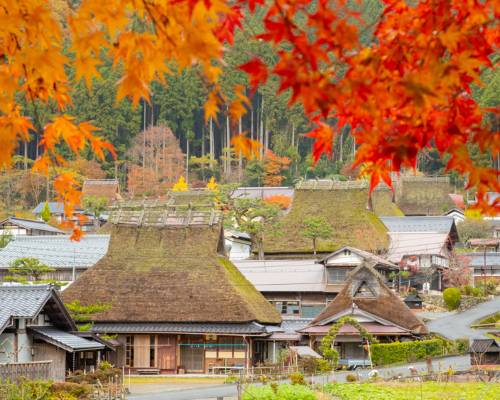
Fall foliage colors at historic village fall foliage color Miyama village At Amanohashidate, Japan turns theatrical. The narrow, pine-covered sandbar stretches across Miyazu Bay like a brushstroke, and from above it becomes one of the country's classic scenic views. Riding across it feels delightfully improbable, a ribbon of trees and sand between two bodies of water. The route then bends north along the Tango Peninsula, where the mood becomes wilder: fishing villages, short coastal climbs, rugged cliffs, and the funaya boat houses of Ine, built directly over the water. Near Taiza, the Tateiwa sea rock rises offshore, a final exclamation point from the coast.
The last stretch toward Kumihama Bay and Kinosaki Onsen turns the journey from cycling adventure into hot spring celebration. After days of temples, rivers, kayabuki roofs, fish markets, sea roads, and coastal villages, Kinosaki offers exactly the right finale: willow-lined canals, wooden ryokan, yukata robes, clacking geta sandals, and an evening made for soaking. It is a ride from old capital to open sea, from polished Kyoto to rural inns and onsen steam, with each day revealing another Japan just around the bend.
Your Journey, Day by Day

Day 1: Kyoto Arrival - Welcome Dinner & Old Capital First Impressions

  • Arrive in Kyoto.
  • Free time for independent exploring.
  • Trip orientation with your guides.
  • Welcome dinner with the group.

Today we gather in Kyoto, a city where the old capital still lingers in temple lanes, quiet gardens, wooden townhouses, and small neighborhood restaurants. If you arrive early, the day is yours to explore at your own pace, whether that means a gentle wander, a first bowl of noodles, or simply shaking off the journey. This evening we come together for orientation, meet the guides and fellow riders, and enjoy a welcome dinner as the adventure begins.

Relax: Free to explore until dinner
Eat: Dinner
Sleep: Seikoro Ryokan

Day 2: Kyoto City Ride - Silver Pavilion, Sacred Groves & Philosopher's Paths

  • Easy cycling through Kyoto.
  • Visit the Silver Pavilion area.
  • Explore Shimogamo Shrine.
  • Stroll the Philosopher's Path.

We ease into the journey with a relaxed ride through Kyoto, following quiet lanes, waterways, and neighborhood streets away from the city's busier traffic. Today's route gives everyone time to settle into the bikes while enjoying some of Kyoto's classic atmosphere: the elegant Temple of the Silver Pavilion, the peaceful grounds of Shimogamo Shrine, and the leafy Philosopher's Path. It is a gentle first ride, designed for recovering from travel, finding our rhythm, and savoring Kyoto before we head into more remote countryside.

Ride: 13.5 km, Land: easy city cycling
Eat: Dinner
Sleep: Seikoro Ryokan

Day 3: Kyoto to Miyama - River Valleys & Thatched Farmhouse Country

  • Ride out of Kyoto into the northern hills.
  • Follow the emerald Katsura River.
  • Pass yuzu groves and quiet villages.
  • Stay in a traditional kayabuki farmhouse.

From our ryokan, we ride across town and begin a winding climb into the hills northwest of Kyoto. The city slips away surprisingly fast, replaced by forested roads, small settlements, and the green folds of rural Kyoto Prefecture. From the pass, we descend into beautiful countryside along the emerald Katsura River, passing the quiet village of Yuzuno, known for its yuzu citrus orchards. Our destination is Miyama, one of Japan's most charming rural villages, famous for its thatched-roof kayabuki farmhouses. Tonight we stay in one of these traditional homes and enjoy hearty country fare prepared from local ingredients. After Kyoto's temples and lanes, Miyama feels like stepping into a slower, woodsmoke-scented corner of old Japan.

Ride: 70 km, Land: city exit, mountain climb, river valley descent
Eat: Breakfast, Lunch, Dinner
Sleep: Kayabukitei

Day 4: Miyama to Obama - Forest Passes & the Road to Wakasa Bay

  • Ride deeper into the mountains.
  • Climb quiet Gonami Pass.
  • Follow the Minami River valley.
  • Arrive in the historic port town of Obama.

Continuing from Miyama, we ride deeper into the mountains on a rarely used road that climbs steadily through unspoiled forest to Gonami Pass. The riding is quiet and immersive, the kind of road where the sound of tires, birds, and flowing water becomes the day's soundtrack. From the pass, we descend into a peaceful river valley and follow the clear waters of the Minami River through small rural communities. As the landscape gradually opens, we make our way toward the coast, approaching Obama on old roads that avoid major traffic and lead us through quiet neighborhoods. Once a busy port connected to Kyoto by trade routes and food culture, Obama brings us from mountain villages to the edge of Wakasa Bay.

Ride: 55 km, Land: forest climb, river valley, quiet coastal approach
Eat: Breakfast, Lunch, Dinner
Sleep: Sekumiya Hotel

Day 5: Obama to Maizuru - Fish Markets, Sea Roads & Mt. Aoba Views

  • Optional early fish market visit.
  • Ride the shoreline of Wakasa Bay.
  • Stop near Wakasa Wada Beach and Shirohama.
  • Lunch at Aoba Herbal Village.

Early risers can start the day with a glimpse into local life at a small fish market, where auctioneers, buyers, and hand signals move at a pace that needs no translation. After breakfast, we leave Obama on a quiet, narrow shoreline road, with Wakasa Bay opening beside us and the distinctive shape of Mt. Aoba rising ahead. Continuing west, we pass through the fishing town of Takahama and ride along the beautiful stretch near Wakasa Wada Beach, with a stop at the natural arch of Shirohama. After Takahama, the route turns inland into the foothills of Mt. Aoba, avoiding the main road into Maizuru in favor of quieter backroads through farmhouses, valleys, and open countryside. We pause for a relaxed lunch at Aoba Herbal Village, set near the mountain trailhead, before continuing over rolling roads and descending toward Maizuru. Tonight we stay at a traditional ryokan.

Ride: 57 km, Land: coastal road, foothills, rolling backroads
Eat: Breakfast, Lunch, Dinner
Sleep: Kagetsu Ryokan

Day 6: Maizuru to Miyazu - River Valleys, Mythic Gorges & Amanohashidate

  • Follow the Yura River valley.
  • Visit atmospheric Amanoiwato.
  • Arrive at Amanohashidate.
  • Relax at a traditional ryokan with hot spring bath.

From Maizuru, we descend toward the Yura River and follow its gentle course through the valley. Along the way, we detour into a forested ravine to visit Amanoiwato, an atmospheric site associated with the myth of Amaterasu, set deep within a narrow, moss-covered gorge. It is a lovely change of pace: quiet, shaded, and steeped in Japan's oldest stories. Continuing to Miyazu, we arrive at the gateway to Amanohashidate, the narrow pine-covered sandbar stretching across Miyazu Bay. If time allows, we can take the chairlift or cable car up to Amanohashidate View Land for the famous panoramic view over the bay. Tonight we stay in a traditional ryokan in a historic wooden building, with the option to relax in a natural hot spring bath.

Ride: 52 km, Land: river valley, forested ravine, coastal finish
Eat: Breakfast, Lunch, Dinner
Sleep: Seikoro Ryokan

Day 7: Miyazu to Taiza - Pine Sandbars, Funaya Boat Houses & Sea of Japan Cliffs

  • Ride across Amanohashidate.
  • Follow the Tango Peninsula coast.
  • Visit Ine and its funaya boat houses.
  • Stop at the Tateiwa sea rock.

We begin by riding across the iconic pine-covered sandbar of Amanohashidate, a narrow ribbon of land stretching across the bay, before turning north along the coast. The route follows the edge of the Tango Peninsula, alternating between dramatic seaside stretches and short climbs through quiet villages. It is a day of salt air, fishing harbors, and expanding views across the Sea of Japan. A highlight is Ine, known for its traditional funaya boat houses built directly over the water, where boats are sheltered below and living spaces sit above. From Ine, we continue along a rugged, indented coastline with wide sea views and a beautifully remote feel. Near the end of the ride, we stop at Tateiwa, a striking monolithic rock formation rising from the sea, before continuing to our accommodation in the fishing village of Taiza.

Ride: 62 km, Land: coastal roads, short climbs, rugged seaside riding
Eat: Breakfast, Lunch, Dinner
Sleep: Yoshinoya Ryokan

Day 8: Taiza to Kinosaki Onsen - Kumihama Bay & Hot Spring Evenings

  • Continue along the Tango Peninsula.
  • Ride toward scenic Kumihama Bay.
  • Cross into Hyogo Prefecture.
  • Finish in Kinosaki Onsen.

Our final riding day continues west from the Tango Peninsula toward Kumihama Bay, a quieter coastal corner of northern Kyoto known for its calm water, fishing culture, and broad Sea of Japan views. The ride links small seaside communities, rural roads, and coastal scenery as we gradually make our way toward Hyogo Prefecture. By afternoon, the mood shifts from cycling journey to hot spring celebration as we arrive in Kinosaki Onsen, one of Japan's classic hot spring towns. After days of mountains, coast, temples, and fishing villages, Kinosaki is a perfect finale: willow-lined canals, wooden ryokan, clacking geta sandals, yukata robes, and a whole evening devoted to soaking, strolling, and savoring the end of the ride.

Ride: 45 km, Land: coastal roads, rural lanes, hot spring town finish
Eat: Breakfast, Lunch, Dinner
Sleep: Onishiya Suisahouen

Day 9: Departure - Train Connections & Farewell to Northern Kyoto

  • Final breakfast.
  • Shuttle to the train station.
  • Return toward Kyoto.
  • Continue onward in Japan.

After breakfast, the tour comes to an end. We shuttle everyone to the train station for connections back to Kyoto or onward to other destinations in Japan. Farewell to the Sea of Japan coast, the quiet roads of northern Kyoto, and a wonderfully varied ride from old capital to onsen town.

Travel: Shuttle to train station
Eat: Breakfast

Back to the story         Always start with the itinerary

Does this sound like your cup of tea?

Ready to book your spot on the Kyoto to the Sea? Check out the available dates & prices, then sign up! Or request a private date for you & your friends, family.

Check Dates

Get an itinerary for your friends? Send your friends (or yourself) a copy of all the sweet details, day-by-day itinerary, route profiles, inclusions, and more!

Request Tour Flyer

The cool inns where you will sleep!


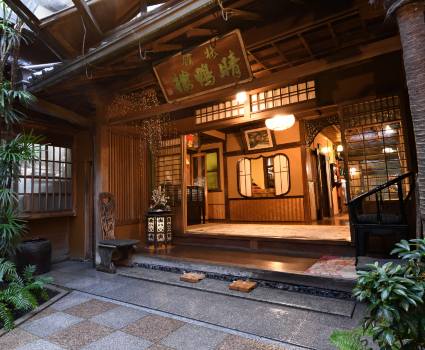
  • photo of Seikoro

    Seikoro

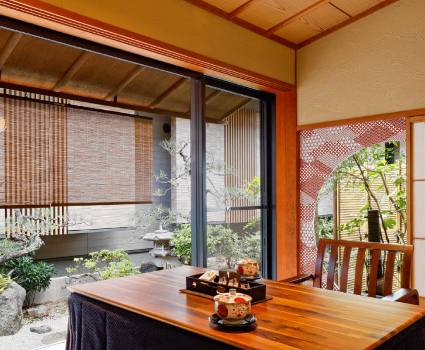
    Founded in 1831, this classic Kyoto ryokan pairs tatami rooms and polished old-world service with the calm, traditional atmosphere of the ancient capital.T

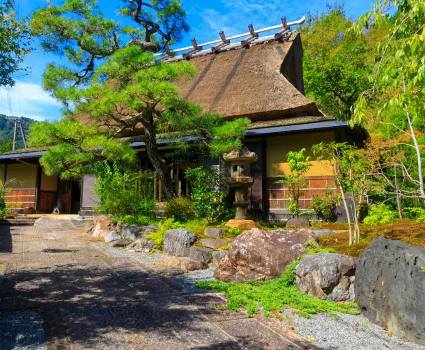
  • photo of Kayabukitei

    Kayabukitei

    A renovated thatched-roof farmhouse surrounded by Miyama's mountains, fields, and clear country air. Old timber, local ingredients, and village quiet shape the stay.

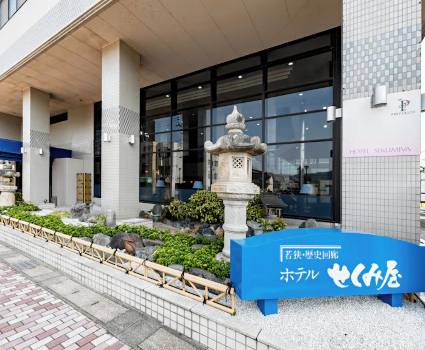
  • photo of Sekumiya

    Sekumiya

    Modern comfort on Wakasa Bay, with hot spring baths and a coastal kitchen rooted in Obama seafood, crab, fugu, and the old Mackerel Road.

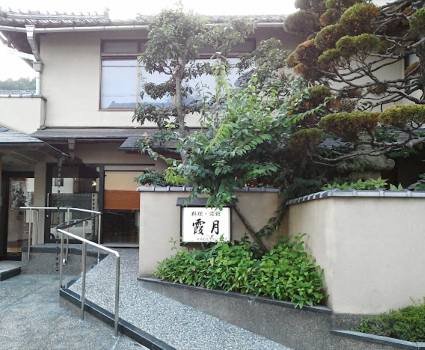
  • photo of Kagetsu

    Kagetsu

    A small ryokan in old Nishi-Maizuru, with Japanese-style rooms, a garden, and a quiet local feel near Maizuru Park and castle-town lanes.

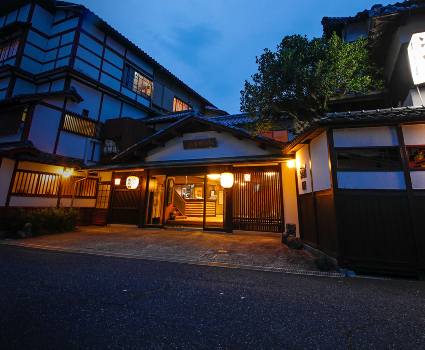
  • photo of Seikiro Ryokan

    Seikiro Ryokan

    A 300-year-old ryokan near Amanohashidate, registered as a cultural property and filled with art, old timber, and quiet Kyoto-by-the-sea atmosphere.

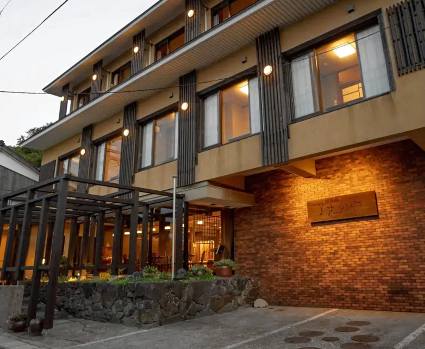
  • photo of Yoshinoya

    Yoshinoya

    A long-loved Taiza ryokan with hot spring baths and a kitchen shaped by the Sea of Japan. Seasonal crab and Tango seafood are the main event.

  • photo of Onishiya Suisahouen

    Onishiya Suisahouen

    A tatami-floored inn in Kinosaki Onsen, with open-air baths, lantern-lit warmth, and easy access to the town's beloved public bath circuit.

Note: Hotels shown are our preferred choices but may not be available for all dates. Alternates will be of similar style and quality.

Ready to Join Kyoto to the Sea


Book a scheduled departure or request your own dates.

21 - 29 Apr 2027 $7895 9 days Book Now available
13 - 21 Oct 2027 $7895 9 days Book Now available
single occupancy from +$1000deposit $1175prices per person in US Dollars
Plan a private departure for you, your friends or family!       Request Your Dates

All the little details!

Getting to the Fun!

The Kyoto Cycling Tour meets Kyoto Station and ends at Kinosaki Onsen station.

Guests should plan their train bookings to arrive in Kyoto before 15:00 (3 pm) on Day 1 of the tour and their departure from Kinosaki after 10:00 (10 am) on Day 8. Guests can fly via Osaka (KIX), Nagoya (NGO) or Tokyo (NRT & HND), then catch the bullet train to Kyoto's main station.

Kinosaki has direct trains to Kyoto, as well as connections to Tokyo, Osaka. Your guide team can assist you in booking the local train to Kyoto.

Local Time: GMT+9

Whatcha gonna getExceptional Stays & Comfort
  • Charming boutique lodges & Japanese inns
Delicious Local Flavors
  • Flavorful dinners with local specialties
  • Hearty breakfasts, café-style lunches
Adventure & Exploration
  • Free use of top-quality bicycles
  • Expert bilingual guides with insider knowledge
  • Detailed route maps & easy-to-follow instructions
Hassle-Free Support
  • Support van for luggage & easy lifts
  • Unlimited refreshing drinking water
Your papers, please

All guests need a valid passport for this tour, and your passport should be valid for at least six months beyond the end of the trip.

Many Pedalers guests, including U.S. passport holders, do not need a visa for a short tourist visit to Japan. Travelers with other passports should confirm current requirements before booking international flights.

What is the food like in rural Japan?

Japan is one of the world's great food cultures, and meals are as beautifully presented as they are delicious. Expect locally grown produce, homemade pickles and sweets, fresh fish, rice or noodles, and beautifully prepared regional dishes, perhaps with a cold Japanese beer at the end of the day.

Can you accommodate special dietary needs in rural Japan?

The small, traditional minshuku and ryokan used on this tour are not able to provide vegetarian or vegan meals. These rural inns usually prepare one set dinner menu for all guests staying that evening, and while Japanese cooking uses many vegetables, common broths, sauces, and seasonings often contain fish products.

Ryokan and minshuku in larger cities may offer more modern or varied dining options, but the rural inns that give this trip so much of its character are much more traditional. For guests with strict dietary requirements, Japan can be a challenging destination.

How much traffic will we encounter while cycling in Japan?

Our cycling routes follow older roads that have largely been bypassed by modern highways, so traffic is generally light. Most vehicles belong to people living in the small villages and rural towns along the route rather than high-speed through traffic.

Are the cycling roads paved in Japan?

Yes. The roads we ride are paved throughout the tour, though some rural lanes are older and may be patched in places. That is part of riding quieter roads rather than busier modern highways.

How difficult is navigation while cycling in rural Japan?

This is a guided tour, so navigation is not something guests need to manage alone. We provide GPS tracks, the guides ride with the group, and the support van positions ahead at key turns as an extra precaution. Many signs are in Japanese, but local people are often happy to point you in the right direction even when English is limited.

What are Japanese drivers like around cyclists?

Japanese drivers are generally patient, polite, and respectful around cyclists. On the quiet rural roads we use, traffic is light and passing vehicles usually give riders plenty of space.

Will we encounter many steep climbs in Japan?

There are a couple of longer climbs during the tour, but the grades are generally reasonable, usually in the 4 to 7% range. The reward, of course, is the downhill run that follows.

What is the weather like during our Japan cycling tours?

We schedule our Japan cycling tours in spring and fall, when the weather is usually at its best: warm days, cool nights, and less rain than the hotter, more humid summer months. Fall departures are planned after the main Pacific typhoon season begins to wind down.

How common is English in rural Japan?

English is not widely spoken in the small villages and rural towns we visit, which is one reason traveling with guides is so helpful. Your support crew is there to translate, smooth the small details, and help make everyday encounters part of the pleasure of traveling in Japan.

What makes cycling Japan different from cycling Europe?

Cycling in Japan feels wonderfully different from riding in Europe or North America. The quiet villages, traditional inns, regional food, careful hospitality, and centuries-old rural landscapes create a journey that feels far removed from the familiar images of Tokyo crowds and neon. It is still cycling, but the cultural setting is entirely its own.

More cool adventures for you


Request a copy of this tour's details to read offline
and share with your friends.


Send a copy to your friend:


X

Book: Kyoto to the Sea for date selected


X

Go Private: Kyoto to the Sea

Tell us what you have in mind and we'll see what we can put together.


X
join our mailing list form

 Stay in the Loop with Pedalers 

Get our newsletter with details on new tours, destinations and recipes for the exotic dishes we discover.
(fried spam and eggs ok, email spam no way)


X